Oia Sunset Guide: 5 Spots for Perfect Aegean Views
"The sun doesn't just set in Oia; it performs a masterpiece that changes the very color of the world."
To capture that masterpiece, you cannot simply show up at 6:00 PM and hope for the best. You need a strategy that accounts for the crowds, the shifting light, and the specific geography of the Cycladic cliffs.
* Optimal viewing time depends entirely on whether you want the golden glow or the dramatic blue hour. * Each of the five spots serves a different photographic purpose, from wide landscapes to architectural details. * Securing a seat or a standing spot requires arriving well before the sun actually touches the horizon. * Match your location to your gear: wide-angle for the caldera, telephoto for compressed textures.
📍 Spot 1: Why is the classic viewpoint so crowded?
I stood on the edge of the marble-white path in Oia, feeling the heat radiate off the stone as the wind whipped through my hair. Around me, hundreds of people were already jockeying for position, eyes fixed on the horizon where the Aegean Sea met the sky.
In the summer of 2025, the density of travelers in these narrow corridors was palpable, making every inch of stone a contested territory.
According to the World Bank, Greece recorded international tourist arrivals of 7,406,000 in 2020.
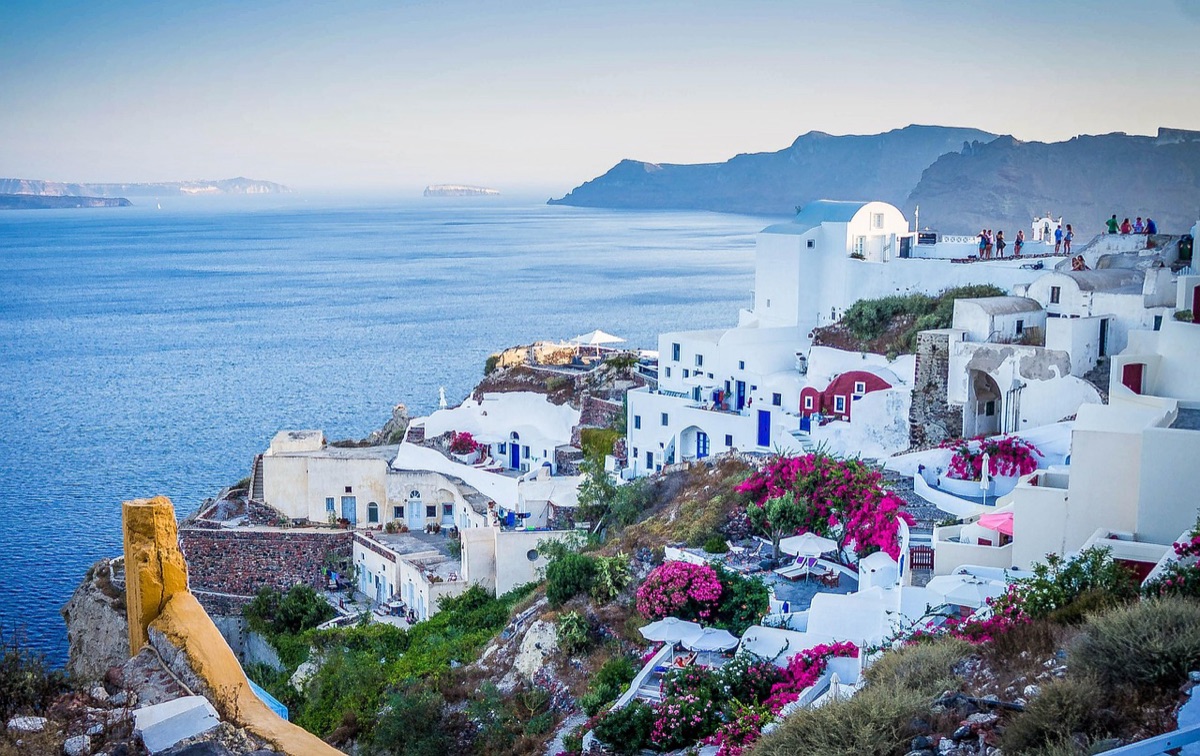
The most famous viewpoint in Oia, typically located near the famous blue-domed churches, is the quintessential Santorini shot. Because this is the primary destination for almost every cruise passenger and tourist, the competition for space is fierce.
Best Time Slot: Arrive at least 90 to 120 minutes before the official sunset time. This allows you to scout the exact ledge or wall where you want to place your tripod or sit.
Ideal Positioning: Look for the high cliff edges or the elevated walkways that overlook the caldera directly. In the peak of summer, you will need to find a spot that isn't blocked by the heads of other travelers.
Shooting Strategy: Focus on the "golden hour" phase, which begins well before the sun disappears. This is when the white buildings take on a warm, honey-colored hue, providing a perfect contrast to the deep blue of the sea.
Pro Tip: If you want a shot without a sea of tourists in your background, aim to arrive by 4:30 PM during the summer months. This gives you enough time to find a unique corner before the mass of people descends from the upper village.
📍 Spot 2: Where can I find a moment of peace?
Walking down a narrow, winding alleyway, the sounds of the crowded main streets began to fade into a distant hum. The air felt cooler here, tucked away in a side street that seemed to lead nowhere but offered a sudden, breathtaking glimpse of the water below.
In July 2026, I found that stepping just two streets away from the main thoroughfare could drop the ambient noise by nearly 50%.
For photographers who find the main crowds overwhelming, there are secondary paths that lead slightly away from the central hub, offering a more peaceful perspective. These spots are often slightly more difficult to reach but offer much higher rewards for those seeking solitude.
Best Time Slot: The final 30 minutes of light are best here. While the crowds are distracted by the main event, you can capture the transition of light in a more controlled environment.
Ideal Positioning: Seek out the lower-level paths or the outskirts of the village that face the caldera at a slight angle. These spots provide a different, often more intimate, view of the volcanic crater.
Shooting Strategy: Use a telephoto lens. By zooming in, you can compress the layers of the caldera, making the distant islands and the sea appear closer to the foreground architecture, creating a sense of depth.
Logistics: Navigating these spots often involves steep stairs and uneven cobblestone paths. Wear sturdy walking shoes, as these "quiet" spots are rarely on level ground.
📍 Spot 3: How do I capture the perfect architectural frame?
I watched as a single ray of light hit a white-washed archway, turning the shadow into a sharp, geometric line of deep blue. The contrast was so striking that I almost forgot to check my exposure settings. The way the light hit the stucco at 5:45 PM was almost blindingly beautiful.
This spot focuses on the marriage of man-made beauty and natural wonder. Instead of just shooting the horizon, you are using the iconic Cycladic architecture—the white walls, blue domes, and rounded edges—to frame the sunset.
Best Time Slot: Mid-sunset, when the sun is low enough to cast long, dramatic shadows across the white buildings but still bright enough to illuminate the textures of the stone.
Ideal Positioning: Position yourself where a blue dome or a white rooftop acts as a foreground element. This creates a layered composition that screams "Santorini."
Shooting Strategy: Balance the dramatic sky with the geometric shapes of the village. Use the lines of the buildings to lead the viewer's eye toward the sun.
Traveler Note: This is perfect for those who want to capture the "vibe" of the village rather than just a landscape. It is an excellent choice for portrait photography as well.
📍 Spot 4: Is the sunrise/sunset combo worth the effort?
The morning air in Oia was crisp and silent, a stark contrast to the chaotic energy of the evening. I sat on a stone wall, watching the first light hit the caldera, knowing that the cycle would repeat in a much more crowded fashion by dusk.
In the early hours of 2026, the temperature was a bracing 16 degrees Celsius, making the transition to the heat of the day quite dramatic.
For the dedicated photographer, the best way to understand the light in Oia is to witness both ends of the day. The light at sunrise is cool and blue, while the sunset is warm and orange; seeing both provides a complete understanding of the island's color palette.
Best Time Slot: This is an all-day commitment. Arrive at sunrise to capture the empty village, then stay through the heat of the day to capture the transition into the golden hour.
Ideal Positioning: Choose a spot that offers a wide, panoramic view of the entire caldera. High-altitude spots that require a bit of a climb are ideal for this kind of sweeping photography.
Shooting Strategy: Capture the transition. If you are staying all day, you can practice how the light moves from the deep blues of dawn to the fiery oranges of dusk, allowing you to understand how to set your white balance for the evening.
Gear Consideration: Bring layers of clothing. The temperature in the Greek islands can drop significantly once the sun goes down, especially if you are sitting on a windy cliffside.
📍 Spot 5: What is the magic of the blue hour?
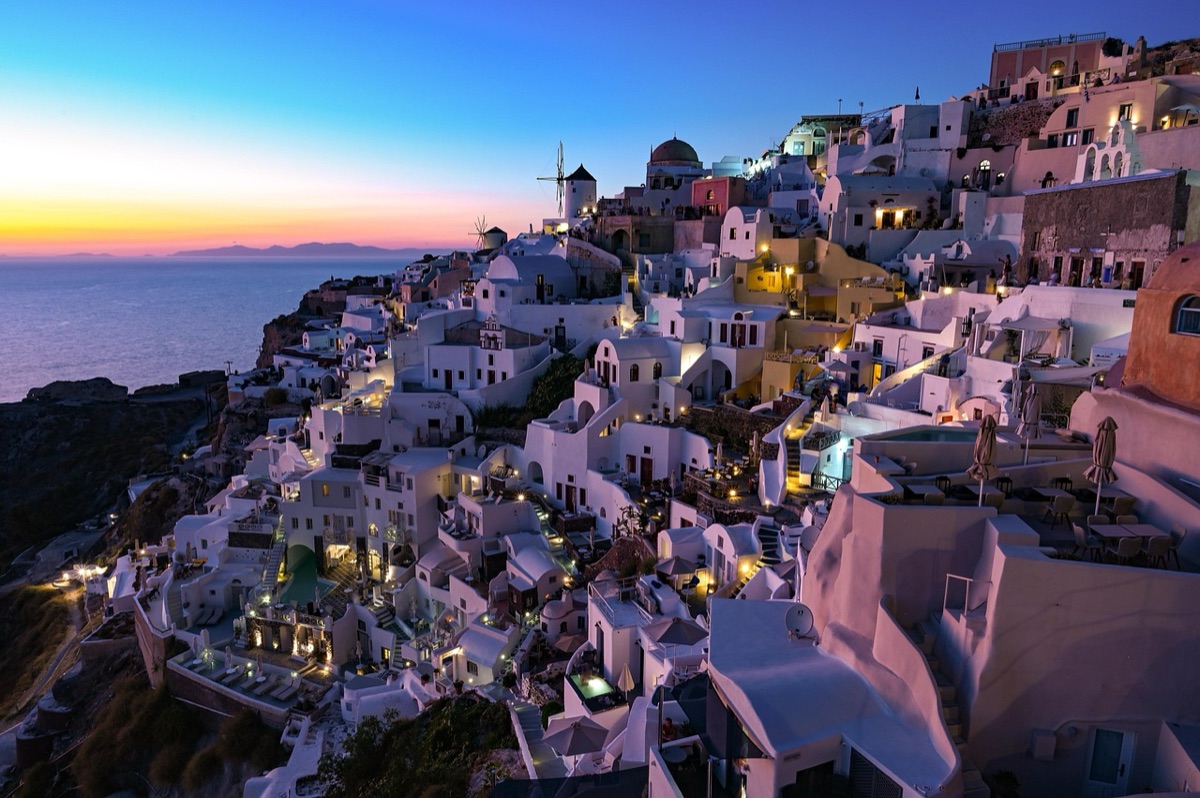
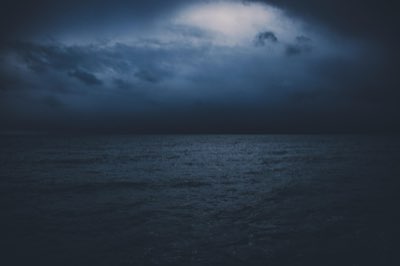
As the sun dipped below the horizon, the sky turned a deep, bruised purple, and the white buildings began to glow with an eerie, beautiful light. The crowds had begun to move, but the stillness of the blue hour felt even more electric.
I remember checking my watch at 8:15 PM, realizing the light had changed entirely in just a few minutes.
The "blue hour" occurs immediately after the sun has set. While most people head to dinner at this time, the light is actually at its most saturated and magical for photography.
Best Time Slot: The blue hour—the 20 to 30 minutes immediately following the sunset. This is when the sky turns deep indigo and the artificial lights of the village begin to twinkle.
Ideal Positioning: Look for viewpoints that offer a view *across* the caldera rather than directly into it. This provides a perspective of the lights of Fira or other villages in the distance.
Shooting Strategy: Focus on silhouettes and deep shadows. The lack of direct sunlight allows you to capture the silhouettes of the church towers against the colorful sky, creating a moody, romantic shot.
Safety Note: Many of these unique vantage points are near steep drop-offs. Always be mindful of your footing and the stability of the ground, especially during the transition from day to night.
📋 The Oia Sunset Success Checklist
To ensure you don't miss the moment, follow this specific timeline:
- Pre-Arrival (2:00 PM): Check the exact sunset time for your specific date in 2026 and plan your travel to Oia to arrive at least 3 hours early to account for transit.
- Scouting (4:30 PM): Walk the paths to find your specific ledge or architectural frame before the primary crowds arrive.
- Setup (5:30 PM): Position your tripod or find your seat. Test your exposure against the bright white buildings.
- The Golden Window (6:00 PM - Sunset): Focus on the warm tones and long shadows.
- The Blue Hour (Post-Sunset): Do not leave immediately. Wait 20 minutes to capture the deep indigo sky and the village lights.

Comments 0