8 Tips for Santorini Photos: Timing, Viewpoints, and More
"The light in Santorini doesn't just illuminate the scenery; it sculpts the very soul of the Cyclades."
If you want photos that look like professional travel magazine spreads rather than crowded snapshots, you have to stop chasing the view and start chasing the light. Mastering the timing and the geometry of the caldera is the difference between a flat, washed-out image and a masterpiece.
Key Takeaways * Timing is non-negotiable: Prioritize the "Golden Hour" and "Blue Hour" to capture the soft, transformative glow of the Aegean. * Village Selection: Choose your village based on your goal—Oia for romance, Imerovigli for drama, and Fira for depth.
* Compositional Depth: Use white stucco walls, blue domes, and winding staircases as leading lines to guide the viewer's eye.
🌅 Why does the light change so much at sunset?
I stood on a narrow stone ledge in Oia at 5:30 PM on a Tuesday in July 2025, the heat of the day still radiating from the white volcanic rock against my skin. The sun was beginning its slow descent, turning the harsh white of the buildings into a soft, buttery gold.
In that moment, I realized that the most beautiful photos aren't taken when the sun is at its peak, but when it begins to surrender.
The "Magic Window" in Santorini typically occurs during the hour before sunset and the period immediately following it. In the summer months of 2025 and 2026, you should aim to be in position by 6:30 PM to catch the transition.
This is when the shadows lengthen, providing the contrast necessary to define the textures of the whitewashed walls.
If you find yourself stuck in the heat of midday, do not despair. While the harsh overhead sun can flatten your images, you can use it to your advantage by focusing on high-contrast textures or seeking out the deep, cool shadows of narrow alleyways.
In these shaded pockets, the light becomes indirect and soft, perfect for portrait photography.
For those using professional gear, the transition from golden light to dusk requires quick adjustments. As the light fades, you will need to increase your ISO slightly to maintain a fast enough shutter speed to prevent blur, especially if you are shooting handheld.
| Light Phase | Visual Effect | Best Use Case |
|---|---|---|
| Golden Hour | Warm, soft, low-contrast glow | Romantic portraits and wide landscapes |
| Blue Hour | Deep blue hues, ethereal atmosphere | Cityscapes and architectural shots |
| Midday | High contrast, sharp shadows | High-fashion shots and texture studies |
But timing is only half the battle; you also need to know where to stand.
🏛️ Which village offers the perfect frame?
Walking through the labyrinthine streets of Fira in the early morning of June 2025, I felt the sheer verticality of the island. Every turn revealed a new layer of the caldera, a dizzying drop that seemed to pull the blue of the sea directly into the white of the town.
Choosing where to stand is the first step in telling your visual story.
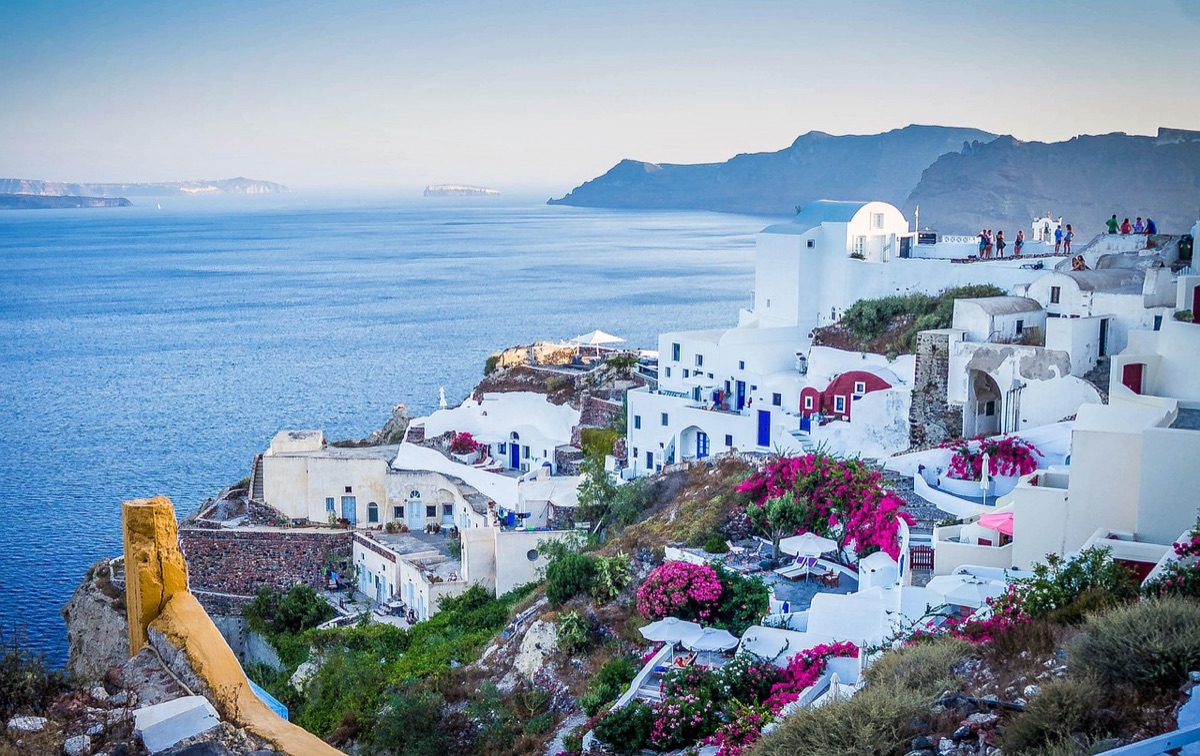
Oia is the undisputed capital of the sunset, but it is also the most crowded. To find a unique perspective, move away from the main castle ruins and look for the secondary pathways that lead to quieter viewpoints.
These spots offer a slightly elevated perspective that can help you capture the famous blue domes without a hundred tourists in the background.
For those seeking pure, unobstructed drama, Imerovigli is your destination. Often called the "balcony to the Aegean," this village sits at a higher elevation than Oia.
The views here are vast and sweeping, making it the perfect location for wide-angle shots that capture the sheer scale of the volcanic caldera.
Fira, by contrast, offers incredible depth. Because of the way the town is built into the cliffside, you can use the different levels of buildings to create a sense of scale.
When framing a shot of a blue dome, try to include a portion of a white wall or a pink bougainvillea flower in the corner of your frame to provide context and color balance.
However, even the best location can produce a boring photo if you don't master the angles.
📐 How do you move beyond the tourist shot?
I remember crouching low on a stone staircase in Pyrgos at 7:00 AM, the rough texture of the volcanic rock pressing against my knees. I wasn't looking at the horizon; I was looking at how the white stairs spiraled upward, creating a perfect geometric pattern against the deep blue sky.
A common mistake is to shoot everything at eye level. To add professional flair, use the "Leading Line" technique. In Santorini, the winding staircases, narrow alleys, and the very edge of the caldera act as natural lines that lead the viewer's eye through the image.
Following a white wall from the foreground into the distance creates an incredible sense of journey.
Applying the Rule of Thirds is also vital. Do not place the horizon line directly in the middle of your frame. Instead, place the sea in the bottom third and let the sky or the architecture occupy the top two-thirds, or vice versa. This creates a more balanced and professional-looking composition.
Don't forget foreground interest. A shot of a vast sea can sometimes feel empty.
By including a piece of a white stucco wall, a blooming flower, or a textured stone ledge in the foreground, you add a sense of three-dimensional depth that makes the viewer feel like they are standing right there with you.
But how do you translate these technical skills into a cohesive travel story?
✈️ How do you capture the true Santorini vibe?
Sitting at a small table in a seaside taverna in late August 2025, the smell of grilled octopus and salty air filled the space. As the sun dipped lower, the light hit a glass of chilled Assyrtiko wine, making it glow like liquid gold.
According to World Bank, Greece recorded international tourist arrivals of 7,406,000 in 2020.
It wasn't just a view; it was a feeling of pure, unadulterated leisure.
To capture the "lifestyle" of the island, move beyond the landscape. The human element—the clinking of glasses, the laughter over a meal, or the quiet moment of a traveler looking out over the water—adds soul to your photography. These shots tell the story of the experience, not just the geography.
When planning your outfits for photos, consider the color palette of the island. The dominant colors are white, deep blue, and earthy terracotta. Wearing solid, neutral colors or soft pastels will help you harmonize with the environment.
Avoid heavy patterns that might compete with the intricate textures of the Greek architecture.
Focusing on small details can also yield stunning results. A close-up of a local delicacy, the texture of a handmade ceramic plate, or the way the light hits a single vine of bougainvillea can serve as beautiful "filler" shots for a photo album or a social media feed.
These details provide a sense of place that a wide shot alone cannot convey.
Before you pack your bags, you need a concrete plan of action.
📋 The Santorini Photography Checklist
To ensure you don't miss the magic, follow this structured approach during your trip:
- Pre-Trip Planning: Download an offline map of the Cyclades and research the exact sunrise/sunset times for your specific dates in 2026.
- Morning Light Session (6:30 AM - 8:30 AM): Head to quieter villages like Pyrgos or Akrotiri to capture the softest light and empty streets.
- Midday Shelter: Use the heat of the day to scout locations and practice macro photography (close-ups of textures/flowers) in the shade.
- Golden Hour Setup (5:30 PM - Sunset): Position yourself in Oia or Imerovigli at least one hour before the sun begins to set to secure your spot.
- Blue Hour Wrap-up: Stay in place for 30 minutes after the sun disappears to capture the deep blue tones of the Aegean.
*Note: These techniques assume you are using a standard camera or smartphone. High-end professional equipment may require different settings for extreme light transitions, and photography in remote areas should always be balanced against physical safety and local accessibility.*

Comments 0