7.4M Visitors: Engaging with Greece's Living Culture Safely
"Beyond the postcards: Understanding the vibrant, evolving heart of modern Greece as you experience Santorini."
While the blue domes of Oia and the volcanic cliffs of the Caldera provide a stunning backdrop, the true essence of Greece lies in its transition from a traditional Mediterranean society to a modern, progressive nation.
For travelers, understanding this shift is key to moving beyond the role of a mere spectator and becoming a respectful guest in a living culture.
* Modern Greece reflects deep societal evolution, moving toward progressive social acceptance. * Visitors should be aware of the country's contemporary legal frameworks regarding personal freedoms. * Cultural etiquette balances deep-rooted traditions with modern, inclusive realities. * This guide bridges the gap between idyllic scenery and living culture.
Why is Understanding Modern Greek Society Important for Tourists?
The sun hangs low over the Aegean Sea, casting a golden hue over the white-washed walls of Fira as a group of travelers navigates the narrow, winding alleys.
To the casual observer, this looks like a timeless scene, but beneath the surface, Greece is a nation in constant motion, balancing ancient heritage with rapid modernization.
Understanding this duality is essential because you are not visiting a museum; you are entering a functioning, evolving society. Greece has undergone profound changes in its social and legal structures over recent decades.
While the traditions of the Orthodox Church and local customs remain influential, the legal framework has moved toward a more inclusive and rights-based approach.
The scale of this interaction is massive. To put the human element in perspective, Greece recorded 7,406,000 international tourist arrivals in 2020, according to World Bank data.
This influx of global perspectives means that the local culture is constantly interacting with various social norms, making it vital for visitors to understand the local context to foster respectful engagement.
By recognizing that Greece is a place of both deep roots and new growth, you can navigate your travels with greater empathy. This understanding ensures that your presence in places like Santorini is additive rather than disruptive to the local way of life.
But understanding the broad scope of a nation is one thing; understanding the specific rights of its people is another.

How do I navigate LGBTQ+ rights and acceptance in Greece? A couple walks hand-in-hand through a quiet plaza in Pyrgos, feeling the warmth of the afternoon sun. They look around, wondering how their presence fits into the local social fabric of a Mediterranean island.
In recent years, Greece has seen significant legal shifts regarding LGBTQ+ rights. The legal landscape has moved toward greater equality, though the transition from traditional values to modern rights often involves complex court rulings.
For example, the restriction of cohabitation agreements solely to opposite-sex couples was once a point of legal contention; the state was ultimately obliged to give a 5,000 euro compensation to each of the plaintiffs in such cases, according to Wikipedia.
The legal protections for LGBTQ+ individuals are clearly defined in the current framework. Laws regarding hate speech and violence are strictly enforced to protect all citizens.
Under current regulations, hate speech and violence against LGBTQ+ individuals or groups can result in imprisonment ranging from three months to three years, along with a fine of 5,000 to 20,000 euros.
If these actions escalate into a crime, the legal consequences become even more severe. In such cases, the penalty is increased by six months of imprisonment and an additional fine of 15,000 to 30,000 euros.
Furthermore, if the offender is a public worker, the law imposes specific accountability, resulting in punishment of six months to three years of imprisonment and a fine of 10,000 to 25,000 euros.
For the traveler, this means that Greece offers a legal environment that increasingly protects personal freedoms and diverse identities. While social nuances may vary between a bustling tourist hub and a remote mountain village, the legal reality provides a foundation of safety and rights.
However, knowing the law is only half the battle; knowing how to act in a local setting is the other.
How do I balance tradition and modernity in local etiquette? In a small taverna in Megalochori, an elderly local resident shares a meal with a young traveler, the conversation a blend of polite gestures and inquisitive glances.
Navigating Greek culture requires a delicate balance between honoring the past and engaging with the present. Greece is a country where the pace of life can shift from the slow, rhythmic traditions of village life to the fast-paced, globalized energy of luxury resorts.
This transition is mirrored in the economic landscape; for instance, Greece recorded a GDP per capita of US$26,948 in 2025, according to World Bank data, reflecting a growing modern economy.
When interacting with locals, it is helpful to remember that respect is a two-way street. In traditional settings, politeness and an awareness of local customs—such as modest dress in certain religious sites—are appreciated.
However, the modern Greek identity is also one of openness and cosmopolitanism.
The societal acceptance of diverse lifestyles is a growing reality. While you may encounter more traditional viewpoints in rural areas, the general atmosphere in tourist-centric regions like Santorini is one of tolerance and hospitality.
Being mindful of this balance—respecting local traditions while acting within your own values—allows for a seamless travel experience.
But how do you actually apply these nuances when you are standing in the middle of a historic village?

How to Respectfully Engage with Greek Culture
I remember standing in a quiet courtyard in Oia at 6:00 PM, watching the light hit the stone walls, wondering if my presence was too loud for such a peaceful place. It taught me that respect is often about the volume of your presence, not just your words.
To navigate your own visit, follow these practical steps to ensure you are a guest rather than an intruder:
- Observe the local rhythm: In smaller villages, avoid loud gatherings in public squares during the late evening or very early morning.
- 2.son Dress for the occasion: When visiting a monastery or a traditional church, ensure your shoulders and knees are covered to honor local religious customs.
- Learn basic greetings: Using simple Greek phrases like "Kalimera" (Good morning) can bridge the gap between you and a local shopkeeper.
- Support the local economy: Choose family-run tavernas over large international chains to help sustain the community you are visiting.
- Respect photography boundaries: Always ask for permission before taking close-up portraits of locals, especially the elderly.
By following these steps, you move from being a tourist to being a traveler. But as you move through these beautiful spaces, you might wonder how the local identity survives the sheer scale of global tourism.
Santorini: Where Tradition Meets the Global Stage
The wind whips across the caldera edge as a cruise ship docks in the distance, a reminder of the constant flow of people coming to witness this geological wonder.
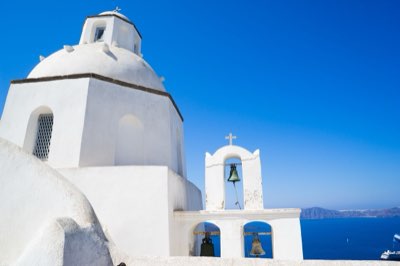
Santorini is perhaps the ultimate example of a place where local identity meets global influence. The architecture—the iconic blue domes and white Cycladic walls—is a testament to a specific way of life designed to combat the sun and wind.
Yet, this setting is now a global stage for weddings, honeymoons, and international tourism.
The cultural codes of the island are unique. The relationship between the people and the volcanic landscape is profound. While the tourism industry drives much of the local economy, the sense of community in the villages remains a vital part of the island's soul.
| Aspect | Traditional Context | Modern Reality |
|---|---|---|
| Social Structure | Family-centric, religious influence | Individual rights, legal equality |
| Economy | Agriculture, fishing, local trade | International tourism, global services |
| Interaction | Formal, ritual-based politeness | Casual, cosmopolitan, diverse |
As you explore the cliffs of Oia or the beaches of Perissa, you are witnessing a culture that is both anchored in its history and reaching toward a modern, inclusive future.
#






Comments 0