Greece Tourism: Economic Engine Driving Modern Prosperity
"The blue of the Aegean is not just a color; it is a national asset that fuels a country's future."
While the sun sets over the caldera, it is setting on a massive economic engine that keeps the Greek economy moving. For travelers, understanding the scale of this industry helps clarify why certain luxury experiences exist and how to navigate the seasonal shifts of the Mediterranean.
Key Takeaways: * Greece relies heavily on tourism and shipping as its primary economic pillars. * Santorini serves as a high-value luxury hub that drives significant revenue through premium lodging and cruise tourism. * Strategic planning regarding seasonality and location (Oia vs.
Fira) is essential for maximizing travel ROI. * The island's unique volcanic geology creates a finite, high-demand destination that justifies premium pricing.
How much does tourism drive the Greek economy? The morning sun hits the marble of the Parthenon, casting long shadows over a city that has seen empires rise and fall, yet its most modern strength lies in its ability to welcome the world.
For decades, the Greek economy has leaned heavily on the movement of people and goods, with tourism and shipping acting as the dual engines of national prosperity. Historically, this reliance has meant that when global markets falter, Greece feels it immediately.
During the 2009 downturn, for example, the country saw a sharp contraction where revenues in its two largest earning sectors—tourism and shipping—fell by 15% according to Wikipedia.
This volatility underscores why the industry is so closely watched by economists and travelers alike. To understand the current landscape, we must look at the recent macroeconomic health of the nation. According to World Bank data, Greece recorded GDP growth of 2.1% in 2025.
While growth is steady, the cost of living remains a factor, as the World Bank also reported that Greece recorded inflation of 2.5% in 2025. Employment levels have also seen shifts, with the World Bank noting an unemployment rate of 8.5% in 2025.
These figures provide the backdrop for a country that is balancing traditional heritage with a modern, service-driven economy. Because the economy is so tied to these sectors, the infrastructure of the islands is often designed to meet high-capacity demand.
This creates a unique tension between mass tourism and the luxury niche. But how does this tension manifest on a single, small island?
Why is the Santorini caldera experience worth so much? A white-washed wall feels warm against the palm of your hand as you walk through a narrow alley in Oia, the scent of blooming bougainvillea heavy in the air. This is the sensory reality of Santorini, a place that feels less like a mere island and more like a masterpiece of geology and architecture.
Officially known as Thira or Thera, Santorini is a Greek island located in the southern Aegean Sea, roughly 200 km (120 mi) southeast of the Greek mainland. It stands as the southernmost member of the Cyclades group of islands.
The land itself covers an area of approximately 73 km2 (28 mi2), and according to a 2021 census, it has a population of 15,480.
The value of Santorini lies in its dramatic setting. The caldera—the partially submerged volcanic crater—provides a vertical landscape that is rare in the world. This geography creates a high-value niche: the "view" is the primary commodity.
While other islands offer beaches, Santorini offers a perspective that justifies premium pricing for honeymooners, luxury travelers, and cruise passengers.
The distinction between a standard Mediterranean vacation and a Santorini experience is the sheer intensity of the landscape. This intensity drives a specific type of traveler: those looking for a bucket-list moment that justifies a higher price point.
However, getting to that moment requires more than just a plane ticket.
Navigating the Journey: Logistics & Investment Decisions for the Modern Traveler
The hum of a ferry engine vibrates through the deck as you watch the coastline of the Cyclades drift slowly into the distance. Choosing how to arrive in the islands is often the first major decision that dictates the rhythm of a Greek itinerary.
When traveling from Athens to Santorini, the choice usually comes down to a flight versus a ferry. A flight is a matter of speed and efficiency, often taking about 45 minutes, whereas a ferry can be a scenic, multi-hour journey that offers a sense of traditional travel.
For those on a tight schedule, the flight is a logistical necessity; for those looking to soak in the transition from the mainland to the islands, the ferry is a ritual.
Once you arrive, the decision of where to base yourself becomes the central question of your trip. Travelers often weigh the pros and cons of different villages:
- Ia (Oia): Famous for its sunsets and luxury villas, it is the peak of romantic luxury but comes with the highest price tags.
- Fira: The administrative and social hub, offering more nightlife and easier access to transport.
- Pyrgos or Megalochori: Less crowded, more traditional, and often more budget-friendly while still offering beautiful views.
Effective travel in Santorini also requires understanding the role of local transport. Because of the steep terrain, using cable cars to descend from Fira to the old port or arranging private transfers is often a necessity rather than a luxury.
When I first arrived in Fira, I attempted to walk the steep stairs with two heavy suitcases; I quickly learned that the verticality of the island demands much more planning than a flat city. But once you settle in, how do you actually spend your time to get the best return?
Curating the Perfect Stay: Hotels, Experiences, and Dining ROI
The sound of water splashing in a private plunge pool echoes against the stone walls of a cave hotel as the midday heat begins to rise. Staying in a traditional "yposkafo" (cave house) is a quintessential Santorini experience, but it represents a significant financial investment.
When deciding on accommodations, travelers must decide if a caldera-view hotel is worth the premium. For many, the ROI of a luxury cave hotel in Oia or Imerovigli is found in the privacy and the unparalleled view of the volcano.
For others, staying in a standard hotel in a lower-elevation village allows for a longer stay and more budget for activities like private yacht charters or wine tastings.
To maximize the value of a visit, follow this checklist for a high-ROI itinerary: 1. Prioritize the Sunset: Book one high-end dinner in Oia to experience the peak of the island's atmosphere. 2.
Diversify the Terrain: Spend at least one day on a catamaran cruise to see the caldera from the water level. 3. Taste the Terroir: Schedule a private wine tasting to understand the unique volcanic soil. ﹃ 4.
Balance the Budget: Mix expensive caldera-view stays with more affordable, authentic stays in villages like Emporio.
A well-planned itinerary—whether it is a quick 2-night romantic getaway or a 5-night deep dive—should balance these high-cost "peak" experiences with more relaxed, local explorations. But there is another layer to this beauty: the visual perfection that everyone seeks.
Beyond the View: Deep Dive into Santorini's Photographic & Aesthetic Hotspots
The golden hour arrives, turning the white buildings into shades of honey and rose, as photographers scramble to find the perfect angle before the sun disappears.
This transition is why people flock to the cliffs of Santorini, seeking that perfect shot that captures the essence of the Cycladic spirit.
While the beauty is undeniable, the landscape is also a reminder of the earth's power. The geology of the island is the result of massive volcanic activity.
Historical seismic events have shaped the terrain, such as the 1956 Amorgos earthquake, which reached a magnitude of 7.5 to 7.8 and impacted the broader Aegean region. This geological history is what created the very cliffs that visitors come to see.
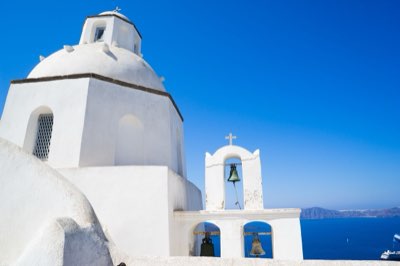
To capture the best photos and experiences, travelers should note these specific elements: * The Blue Domes: Iconic photography spots are often found in the winding streets of Oia. * **Sunrise vs.
Sunset: While sunsets are legendary, sunrise offers much thinner crowds and a different, softer light. * The Volcanic Path:** Walking the trail from Fira to Oia provides a sense of the scale of the caldera.
| Feature | Luxury/Romantic Focus (Oia/Imerovigli) | Hub/Social Focus (Fira/Pyrgos) |
|---|---|---|
| Primary Draw | Unobstructed Caldera Views | Nightlife & Transport Access |
| Price Point | High to Ultra-High | Moderate to High |
| Vibe | Quiet, Secluded, Sophisticated | Bustling, Energetic, Central |
| Best For | Honeymooners & Luxury Seekers | Groups & First-time Visitors |
#

Comments 0